
The modern landscape of large-scale infrastructure and commercial development is a complex ecosystem where every decision carries immense financial and physical weight. Navigating the logistics of a major build requires a project manager to be part engineer, part financial analyst, and part conductor. The sheer scale of operations means that one minor miscalculation in machinery selection or foundational supply procurement can quickly derail timelines, inflate budgets to breaking points, and compromise the safety of everyone on the job site. High stakes are the daily reality of industrial development, where the margin for error is razor-thin and the cost of downtime is measured in thousands of dollars per hour.
Success in these massive endeavors relies on the flawless synchronization of movement and structure. It is a critical mistake to view the procurement of massive lifting machinery and the acquisition of foundational building elements as separate, isolated line items on a budget sheet. Instead, these elements must be treated as a single, integrated logistical network. The machines you choose will dictate how your supplies are moved, while the weight and dimensions of your supplies will dictate the exact specifications of the machines you must deploy. Failing to align these two factors early in the planning phase inevitably leads to logistical bottlenecks, stranded assets, and compromised structural integrity.
This comprehensive guide is designed to provide project managers, site supervisors, and procurement officers with an actionable roadmap for mastering this complex intersection. By reading further, you will explore a deep dive into the practicalities of evaluating site constraints before selecting machinery. We will examine the critical financial decisions involved in vetting vendor partnerships and mitigating operational downtime through proactive maintenance scheduling. Furthermore, we will explore the rigorous procurement standards required to secure top-tier foundational resources. By adhering to the principles outlined below, your team can ensure a seamless, efficient, and deeply secure execution from the initial groundbreaking to the final structural handover.
Evaluate Your Site Footprint Before Selecting Machinery
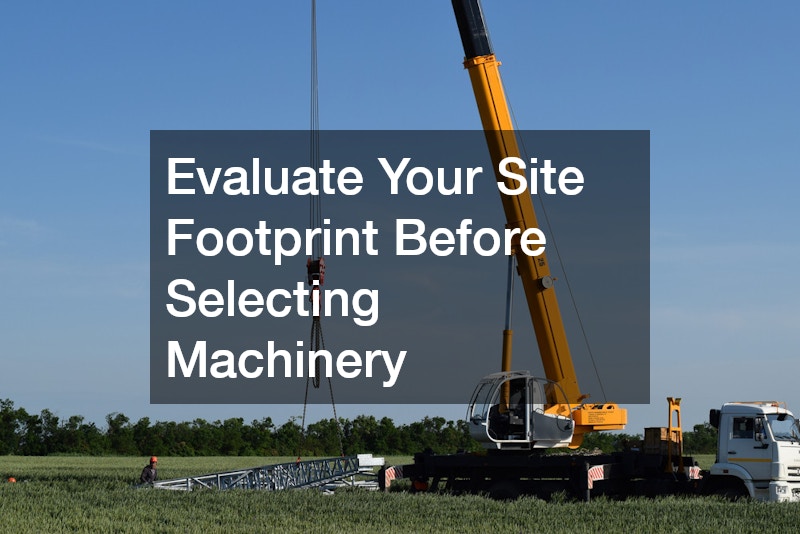
Before a single contract is signed or a deposit is made for heavy machinery, a comprehensive, multi-dimensional assessment of the site’s physical footprint must be conducted. The physical realities of your specific environment will dictate your operational boundaries, forcing you to match the physical capabilities of your lifting machinery to the unchangeable constraints of your location. A machine is only as effective as the space it has to operate within, and ignoring spatial limitations is a surefire way to invite catastrophic delays.
Match Lifting Capacity to Vertical Clearance
When planning operations inside enclosed facilities, manufacturing plants, or existing warehouses, vertical clearance becomes the primary bottleneck for logistics. Standard boom machineries rely on height to achieve leverage and reach, making them entirely unsuited for environments with strict ceiling limits. Site managers must meticulously map the dimensions of the facility, accounting for low-hanging HVAC systems, lighting rigs, and structural support beams.
In these restricted indoor environments, project managers must look toward solutions that do not rely on vertical booms but rather on horizontal support structures. Installing permanent or semi-permanent track systems allows for the safe and efficient movement of massive loads—such as manufacturing dies, turbines, or raw steel—across a wide interior space. Utilizing overhead cranes in these specific scenarios bypasses the issue of vertical clearance entirely, relying instead on the structural integrity of the building’s own framework to support and distribute the weight of the load. This approach not only maximizes the use of available floor space but also provides a highly predictable, repeatable path for material movement that drastically reduces the risk of indoor collisions.
-
Key Site Mapping Considerations for Indoor Lifting:
-
Conduct a laser-guided spatial survey to identify the absolute lowest point of ceiling clearance.
-
Assess the structural load-bearing capacity of the building’s support columns and roof trusses.
-
Map out a clear, unobstructed travel path for the hoist to ensure the load never passes directly over populated workstations.
-
Factor in the swing radius of the load during transit to prevent accidental impacts with interior walls or machinery.
-
Evaluate the power supply infrastructure to ensure it can handle the immense electrical draw of horizontal lifting tracks.
-
Optimize for Tight Urban Operations
Urban builds present a vastly different set of spatial challenges. In densely populated metropolitan areas, space is a premium, and the physical footprint available for staging machinery is often limited to a narrow alleyway or a small cordoned-off section of a busy street. Furthermore, municipalities enforce strict zoning laws, noise ordinances, and traffic control mandates that heavily restrict how and when large machinery can be brought onto the site.
Navigating these urban constraints requires selecting agile machinery that maximizes lifting power while minimizing its physical footprint. Traditional machinery often requires multiple transport trucks to deliver counterweights and boom sections, followed by days of assembly that block city traffic. Instead, urban project managers benefit immensely from specialized machinery that can arrive compactly and deploy itself. Utilizing a self erecting crane allows a construction team to maneuver the unit into a incredibly tight radius, unfold the mast and jib automatically within a matter of hours, and begin hoisting operations without the need for extensive road closures or a secondary assist vehicle.
-
Strategies for Urban Machinery Deployment:
-
Secure municipal permits well in advance, specifically noting the turning radius of the transport vehicles delivering the machinery.
-
Designate a highly specific, reinforced staging pad that can support the outrigger pressure without damaging city sidewalks or subterranean utilities.
-
Coordinate deployment times during off-peak traffic hours, typically between midnight and 5:00 AM, to minimize public disruption.
-
Implement strict swing-zone boundaries to ensure the jib never rotates into the airspace of adjacent private properties.
-
Strategize Your Equipment Sourcing and Vendor Partnerships
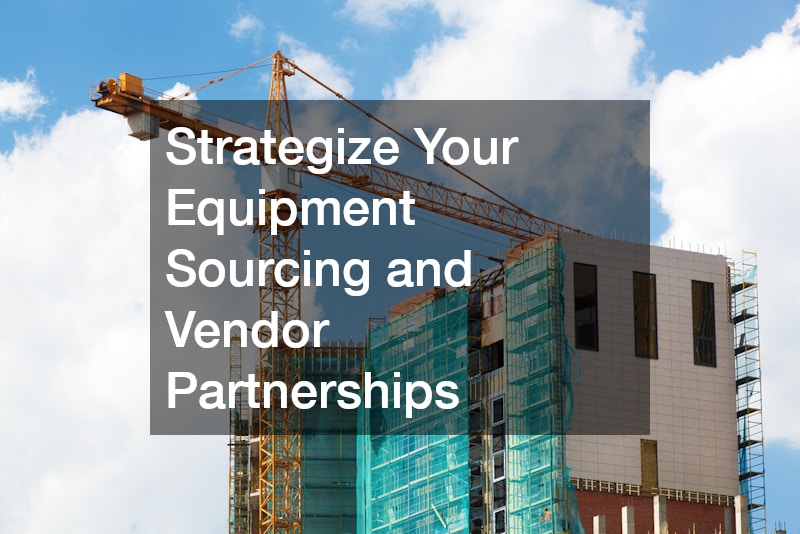
The financial implications of acquiring massive lifting machinery are staggering, often representing one of the largest single line items in a project’s budget. Consequently, the decision of how to source this equipment—and who to source it from—requires rigorous financial analysis and intense vendor vetting. Treating machinery acquisition as a mere transactional purchase is a mistake; it must be viewed as a strategic partnership that will directly influence the safety and timeline of the entire build.
Conduct a Lease-vs-Buy Cost Analysis
Determining whether to permanently acquire heavy machinery or utilize temporary sourcing solutions requires a deep understanding of the Total Cost of Ownership (TCO). Purchasing machinery outright involves a massive initial capital expenditure, but the hidden costs often catch contractors off guard. Ownership brings the ongoing burdens of specialized insurance, year-round storage, continuous preventative maintenance, and the inevitable financial hit of asset depreciation.
For many project managers, particularly those overseeing projects with highly specific, short-term needs or those operating in regions far from their home base, temporary sourcing is the most financially prudent path. Utilizing heavy equipment rentals allows a company to bypass the massive upfront capital investment and the long-term liabilities of ownership. It provides the flexibility to source the exact make and model of machinery perfectly suited for the specific phase of the project, returning the asset the moment its specialized task is complete. This strategy preserves vital liquid capital, shifts the burden of long-term depreciation back to the vendor, and ensures the site is always utilizing modern, well-maintained machinery rather than aging owned assets.
-
Variables to Calculate in Total Cost of Ownership:
-
The projected duration of the specific lifting tasks (measured in weeks or months).
-
The cost of transporting the machinery from a storage yard to the site, versus delivery from a local vendor.
-
The annual cost of specialized heavy-asset insurance premiums.
-
The projected depreciation rate of the asset over a five-year period.
-
The cost of securing off-season storage facilities to protect the asset from weather degradation.
-
Vet Operators and Rigging Expertise
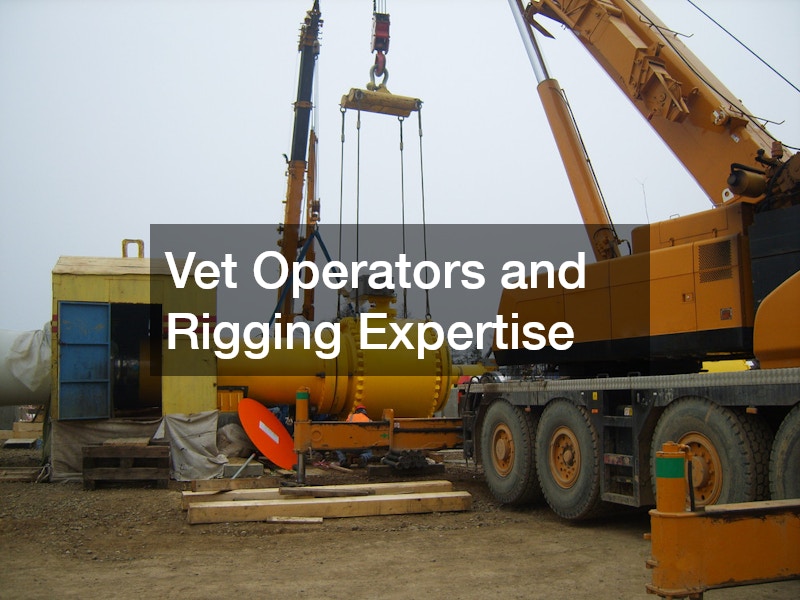
The physical machine is only one half of the equation; the human element operating the levers is arguably more critical to the success and safety of the project. A state-of-the-art machine operated by an inexperienced technician is a massive liability that can lead to dropped loads, structural damage, and fatal accidents. Therefore, the vetting process for the personnel provided by your vendor must be as rigorous as the inspection of the machinery itself.
When evaluating potential vendor partnerships, project managers must look beyond the hourly rate and delve deeply into the vendor’s safety culture and training protocols. Contracting with comprehensive crane services guarantees that you are not just getting a piece of hardware, but a highly trained, fully certified team of operators, riggers, and signal persons. You must demand proof of up-to-date certifications from recognized national boards, review the vendor’s Experience Modification Rate (EMR) to assess their historical safety record, and ensure their personnel have specific experience executing the exact type of high-stakes, precision hoists required by your unique project architecture.
-
Vendor Vetting Checklist for Specialized Operators:
-
Verify active national certifications for all operators, riggers, and signal persons.
-
Request and review the vendor’s official safety manual and critical lift planning procedures.
-
Analyze the vendor’s historical safety data, specifically looking for any recorded OSHA violations or near-miss incidents.
-
Confirm the vendor carries adequate liability and worker’s compensation insurance to fully indemnify your site.
-
Conduct interviews with the lead operator assigned to your site to gauge their experience with your specific logistical challenges.
-
Plan for Ground Logistics, Maintenance, and Uptime
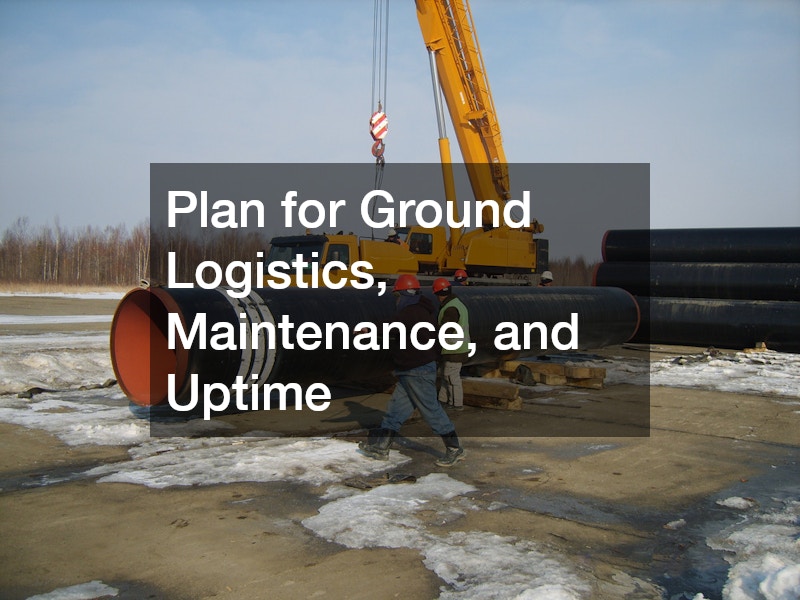
While the massive, sky-high lifts often dominate the attention of site supervisors, the battle for efficiency is usually won or lost on the ground. The flow of daily operations relies heavily on the continuous, uninterrupted movement of secondary supplies and the reliable performance of the machines doing the heavy lifting. Failing to optimize ground-level logistics and neglecting to establish robust maintenance protocols guarantees creeping delays that will slowly suffocate the project timeline.
Streamline Pallet and Material Handling on the Ground
The moment delivery trucks arrive at the site perimeter, the clock starts ticking. If bulk supplies, palletized components, and crated hardware are not immediately moved to their designated staging areas, the unloading zone quickly becomes a chaotic bottleneck that backs up traffic and halts primary operations. Ground logistics must be treated with the same strategic importance as major structural lifts, requiring dedicated pathways, clear staging zones, and specialized ground transport.
Agility is the key to mastering ground movement. The site must be equipped with versatile, terrain-appropriate handlers capable of navigating muddy, uneven ground to quickly distribute supplies exactly where the various trades need them. By integrating dedicated forklift services into the daily operational plan, site managers ensure that specialized telehandlers and rough-terrain movers are constantly circulating. This keeps the primary unloading zones clear, moves essential components out of the way of massive crawler tracks, and guarantees that bricklayers, steelworkers, and carpenters always have their required supplies within arm’s reach, preventing costly idle time.
-
Best Practices for Ground-Level Operations:
-
Establish a one-way traffic flow for all incoming delivery trucks to prevent logistical gridlock.
-
Designate color-coded staging zones based on the specific trade (e.g., blue for plumbing, red for electrical, green for masonry).
-
Grade and compact the primary travel lanes to ensure ground handlers can operate safely without bogging down in mud.
-
Implement a “just-in-time” material distribution system from the main staging yard to the active work zones.
-
Establish Rapid-Response Maintenance Protocols
Even the most meticulously maintained machinery is subject to the immense physical stresses of a working site, making mechanical breakdowns an inevitable reality, not a mere possibility. When a primary lifting machine fails, it doesn’t just stop one task; it creates a domino effect that halts the progress of every trade dependent on that machine, costing the project exponential amounts of money for every hour it remains inactive.
To mitigate the devastating impact of downtime, project managers must shift from a reactive mindset to a highly proactive maintenance strategy. Before finalizing any vendor agreement, it is crucial to negotiate strict Service Level Agreements (SLAs) that legally bind the vendor to incredibly tight repair timelines. You must guarantee that highly trained mobile technicians can be dispatched to your site at a moment’s notice to execute emergency crane repairs. This level of rapid-response infrastructure ensures that a blown hydraulic hose, a snapped cable, or a computer sensor failure is resolved in a matter of hours, rather than forcing your entire workforce to sit idle for days waiting for parts to be shipped from out of state.
-
Crucial Elements of a Maintenance SLA:
-
Define maximum acceptable response times for technician arrival (e.g., under 4 hours for critical path machinery).
-
Require the vendor to maintain a localized stockpile of the most common wear-and-tear replacement parts.
-
Establish mandatory, off-hours preventative maintenance schedules to inspect hydraulic lines, cables, and structural pins.
-
Include financial penalty clauses in the contract if the vendor fails to meet the agreed-upon repair timelines.
-
Secure Structural Integrity Through Rigorous Procurement

The most advanced lifting logistics in the world are entirely useless if the base supplies they are moving are fundamentally flawed. The structural integrity, longevity, and safety of the final facility rest entirely upon the chemical and physical quality of the foundational elements procured during the early stages of the project. Rigorous, uncompromising procurement standards must be applied to every batch of aggregate and every shipment of framing lumber that enters the site.
Verify the Load-Bearing Specs of Your Base Aggregates
The foundation of any massive industrial build is literally poured into the ground, and the chemical composition of that pour determines whether the structure will stand for a century or begin cracking under its own weight within a decade. Procurement officers cannot rely on generic, off-the-shelf aggregates for high-stress industrial applications. Every aspect of the foundational pour—from the hydration rate to the final compressive strength—must be matched exactly to the engineering specifications of the building’s ultimate load capacity.
Site managers must work closely with geotechnical engineers to read and verify the technical data sheets of the proposed aggregate mixes. When procuring these massive volumes, specifying high-grade industrial cement is non-negotiable. This ensures the correct ratio of Portland clinker, fly ash, and slag is utilized to achieve the specific thousands-of-PSI pressure ratings required to support heavy manufacturing equipment, multi-story steel frameworks, and dynamic environmental loads. Furthermore, factors such as curing times must be meticulously coordinated with the overall project schedule to ensure the foundation has reached optimal strength before the first structural columns are hoisted into place.
-
Aggregate Procurement and Verification Steps:
-
Review the geotechnical soil report to determine if sulfate-resistant aggregate mixes are required for the local soil chemistry.
-
Conduct rigorous slump tests on every delivery truck before allowing the pour to commence.
-
Cast and cure test cylinders from each major pour to be crushed in a laboratory at 7, 14, and 28-day intervals to verify compressive strength.
-
Monitor ambient weather conditions closely, utilizing localized heating or cooling techniques to control the chemical hydration process during extreme temperatures.
-
Source Climate-Appropriate Framing and Formwork
Beyond the poured foundations, the skeletal framing and the temporary formwork used to shape the concrete are equally vital to structural success. Wood remains a foundational element in complex builds, whether utilized for engineered roof trusses, heavy timber framing, or the massive formwork required to shape structural concrete pillars. However, introducing raw, untreated lumber into a harsh, exposed site environment invites warping, rot, and catastrophic structural failure.
Procurement teams must carefully vet their lumber suppliers to ensure the timber provided is engineered to withstand the specific climatic challenges of the build location. Selecting reliable industrial wood supplies guarantees access to chemically treated, moisture-resistant timbers, precisely manufactured glulams, and high-density plywood that will not degrade under torrential rain, intense UV exposure, or freezing temperatures. Verifying the kiln-drying process, the chemical retention levels of the preservatives, and the structural grading stamps on every piece of timber ensures that the framework will maintain its precise dimensions and load-bearing capacity throughout the entirety of the project.
-
Timber Procurement Quality Control:
-
Specify the exact structural grade and species of lumber required by the engineering blueprints (e.g., #1 Douglas Fir).
-
Verify the chemical treatment retention levels (e.g., AWPA Use Category standards) for any timber exposed to ground contact or severe weather.
-
Ensure all engineered lumber products (LVLs, glulams) are stored off the ground and protected from direct moisture while staged on site.
-
Inspect incoming shipments for visual defects, excessive knots, bowing, or splitting before accepting delivery.
-
Coordinate Safe Transport and Staging of Bulk Elements
The final piece of the logistical puzzle is the orchestration of movement outside the immediate perimeter of the job site. The vast quantities of raw materials required for an industrial build do not magically appear; they must be transported over highways, navigated through local roads, and safely integrated into the site’s limited staging areas. Failing to control the flow of this incoming transport creates massive bottlenecks, safety hazards, and potentially catastrophic delays on the critical path.
Schedule Phased Deliveries to Prevent Bottlenecks
A common and highly destructive mistake made by inexperienced site managers is front-loading deliveries, bringing massive quantities of supplies onto the site weeks before they are actually needed. This creates an immediate crisis of space. When the site is choked with towering pallets and unorganized piles of raw goods, it becomes impossible for heavy machinery to maneuver safely, vastly increasing the risk of accidents and slowing down every aspect of the build.
To maintain a fluid, safe, and efficient environment, procurement and logistics teams must master the art of phased, “just-in-time” deliveries. This requires meticulously coordinating the arrival of all essential construction materials so that they are delivered exactly when the staging area is clear and the specific trade is ready to utilize them. By establishing a rigid, hourly delivery schedule with suppliers, site managers can prevent the accumulation of clutter, drastically reduce trip hazards, and ensure that the lifting machinery always has a clear, unobstructed path to operate.
-
Tactics for Optimizing Delivery Schedules:
-
Implement a strict delivery appointment system, turning away any unscheduled trucks that attempt to enter the site.
-
Communicate directly with dispatchers to track the GPS location of incoming bulk transports.
-
Create secondary, off-site holding yards for early deliveries to wait until the primary staging area is fully cleared.
-
Assign a dedicated logistics coordinator to manage the flow of traffic at the main entry gates.
-
Prepare Extraction Plans for Immobile Machinery
Despite the most meticulous planning and scheduling, catastrophic variables will occasionally impact the site. One of the most disruptive scenarios is the sudden, mechanical failure of a massive transport vehicle exactly where it hurts the most: in the middle of the only access road or directly in the center of an active staging zone. A dead concrete mixer or a bogged-down flatbed truck instantly halts the flow of operations, trapping other deliveries behind it and bringing the critical path to a grinding halt.
Project managers must have robust, pre-arranged contingency plans ready to execute the second a major blockage occurs. You cannot wait until a 40-ton vehicle dies in the mud to start searching the internet for solutions. It is imperative to have established relationships and pre-negotiated rates with specialized recovery teams. Having rapid-response heavy duty towing on speed dial guarantees that specialized wreckers, capable of hooking up and extracting immensely heavy, immobile assets, can be dispatched instantly. This level of preparedness ensures that a catastrophic vehicle failure results in a minor, hour-long delay rather than a multi-day logistical nightmare.
-
Developing a Site Extraction Contingency Plan:
-
Identify the exact weight and dimensions of the largest transport vehicles entering your site to ensure your recovery vendor has capable wreckers.
-
Map out clear, pre-approved extraction routes that wreckers can use to access and remove dead vehicles without damaging newly poured concrete or subterranean utilities.
-
Ensure all site supervisors have the emergency dispatch numbers for the recovery team programmed into their phones.
-
Conduct a brief site walkthrough with the recovery vendor before the project begins to familiarize them with your specific layout and potential bottleneck zones.
-
Conclusion
The successful execution of a massive industrial project is never the result of luck; it is the culmination of relentless planning, rigorous vetting, and an uncompromising approach to logistical integration. As we have explored, you cannot separate the evaluation of your site’s physical footprint from the machinery you select, nor can you divorce the quality of your foundational procurement from the ultimate safety of the structure. Every decision, from the chemicals in the aggregate to the maintenance schedules of the hoists, is deeply intertwined.
The true value of this comprehensive approach lies in proactive risk mitigation. By conducting rigorous cost analyses, demanding excellence from vendor partnerships, and orchestrating the ground-level flow of goods with precision, project managers can anticipate and neutralize bottlenecks long before they threaten the timeline. The physical and financial stakes are simply too high to rely on reactive management.
As you look toward your next major development, take the time to deeply audit your current logistical blueprints. Challenge your procurement standards, re-evaluate your vendor service agreements, and ensure your team is looking at the interplay of machinery and base supplies as a single, unified system. By consulting with localized sourcing experts and applying the stringent methodologies detailed in this guide, you will position your next project for unparalleled safety, structural integrity, and financial success.