
A customer slips in your store’s entryway, a delivery driver trips over a loose cable in your warehouse, or a visitor gets injured in your parking lot. In the chaotic minutes and months that follow, one question matters most: who is actually responsible for the medical bills, lost wages, and legal costs that follow? Understanding how liability works on business property can save owners and visitors alike from costly surprises, and it can help injured parties know exactly what steps protect their rights. This article breaks down the key factors that determine financial responsibility when accidents happen where business is conducted.
Establishing Legal Responsibility for Property Injuries
Business owners owe a legal duty of care to anyone who steps onto their property, whether that person is a paying customer, a vendor, or someone simply passing through. This duty generally means keeping the premises reasonably safe, fixing known hazards promptly, and warning visitors about dangers that cannot be immediately corrected. The exact standard of care can shift depending on whether the injured person was invited onto the property, there for business purposes, or trespassing without permission.
Determining fault often requires looking at what the property owner knew, or should have known, before the accident occurred. Courts typically examine inspection records, maintenance logs, and prior complaints to decide whether negligence played a role. This is one of the most common reasons injured visitors consult personal injury lawyers early on, since gathering and preserving evidence quickly can make or break a claim.
Identifying Common Hazards That Lead to Claims
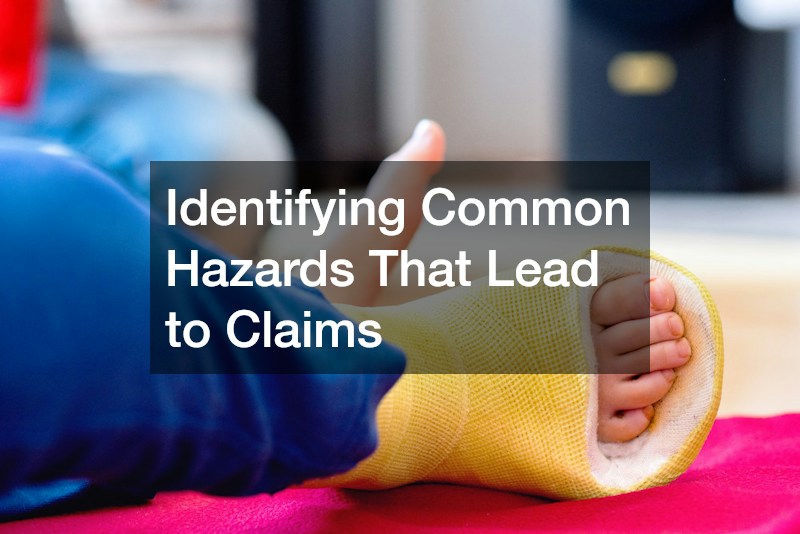
Not every accident on business property looks the same, and the type of hazard often shapes who ends up paying. Wet floors, uneven pavement, poor lighting, and falling merchandise are among the most frequent causes of injury claims against commercial property owners. Slip-and-fall incidents alone account for a substantial share of general liability claims nationwide, often tied to recently mopped floors, leaky refrigeration units, or tracked-in rain near entrances. Uneven walking surfaces are another recurring culprit, whether it’s a cracked parking lot, a torn carpet edge, or a step-down that isn’t clearly marked. Poor lighting compounds these risks, especially in stairwells, parking garages, and back hallways where customers or employees may not see a hazard until it’s too late. Falling merchandise is common in retail and warehouse settings, particularly when shelving is overloaded, improperly anchored, or stacked above recommended height limits. Seasonal issues like ice buildup near entrances or construction debris left in walkways also create significant liability exposure. Snow and ice claims spike predictably each winter, and courts often scrutinize how quickly a business responded once the hazard was reasonably known. Ongoing renovation work adds another layer of risk, since exposed wiring, open pits, or unsecured tools can turn a routine repair into a costly claim if warning signs or barriers aren’t in place.
- Spilled liquids or recently mopped floors without visible warning signs or cones
- Cracked sidewalks, potholes, or crumbling curbs in parking areas, especially after winter freeze-thaw cycles
- Loose handrails, broken steps, or malfunctioning elevators that haven’t passed recent inspection
- Inadequate lighting in stairwells, outdoor walkways, or parking lots after dusk
- Unsecured shelving or stacked inventory that can fall on customers in retail or warehouse settings
- Torn carpeting, uneven flooring transitions, or loose floor mats that create tripping hazards
- Blocked or obstructed emergency exits that delay evacuation during fires or other incidents
- Aggressive pets or inadequately restrained animals on premises, particularly in pet-related or hospitality businesses
- Poorly maintained parking lots with missing wheel stops, faded lane markings, or icy patches left untreated
Reviewing Business Insurance Coverage Options
Most commercial property owners carry general liability insurance specifically to cover injuries that happen on-site. This coverage typically pays for medical expenses, legal defense costs, and settlements up to the policy limits, which can vary widely depending on the size and type of business. Some policies also include medical payments coverage, which pays small claims quickly without requiring a determination of fault.
However, insurance does not automatically mean a claim will be paid without dispute. Adjusters often investigate thoroughly to determine whether the business was negligent or whether the injured person contributed to the accident. Business owners who understand their policy limits and exclusions are far better prepared to handle a claim smoothly, and injured parties should know that insurance companies are not obligated to offer a fair settlement without pushback.
Handling Injuries Involving Vehicles on Commercial Lots
Parking lots and loading zones are frequent sites of vehicle-related injuries, from fender benders between customers to collisions involving delivery trucks. When a car accident happens on business property, liability can fall on the driver, the property owner, or both, depending on factors like lighting, signage, and lot maintenance. Poorly marked pedestrian walkways or malfunctioning traffic signals can shift blame toward the property owner even if a driver was technically at fault.
Anyone injured in this type of incident should consider speaking with an auto accident attorney who can evaluate whether the property’s design or upkeep contributed to the crash. These cases often involve multiple insurance policies, including the driver’s personal auto coverage and the business’s general liability policy, which can complicate settlement negotiations. Getting professional guidance early helps injured parties avoid accepting a lowball offer before the full extent of their damages is known.
Addressing Construction and Equipment Site Risks
Businesses undergoing renovations, expansions, or new construction face a unique set of liability concerns. Temporary structures, exposed wiring, and heavy equipment all increase the chance of injury to employees, contractors, and even passersby. Many growing businesses choose clear span buildings for warehouses or event spaces because the open interior design reduces the number of support beams and columns that can become tripping or collision hazards.
Construction zones also tend to involve waste management challenges that carry their own safety risks. Roll off containers placed near walkways or loading docks must be positioned carefully and marked clearly, since unmarked bins are a common cause of nighttime falls and vehicle collisions. Business owners should work with contractors who follow local safety codes for equipment placement and signage to reduce the likelihood of a costly claim.
Documenting the Scene After an Accident Occurs
What happens in the first hour after an accident can significantly affect any later claim. Photos of the hazard from multiple angles, the surrounding area, and any visible injuries create a visual record that’s hard to dispute weeks later, after a wet floor has dried or a cracked step has been repaired. Witness contact information matters too, since memories fade fast and people who seemed easy to reach at the time often prove difficult to track down once a claim is underway. A written account of events, recorded as soon as possible while details are still fresh, strengthens a case whether you are the injured party or the business owner trying to understand what went wrong. Note the exact time, location, lighting conditions, and anything unusual about the area, such as a missing warning sign or a spill that had gone unaddressed for some time. If security cameras cover the area, preserving that footage immediately is critical, since many systems automatically overwrite recordings after 24 to 72 hours. Incident reports filed with management create an official record that insurance companies and attorneys will reference later. These reports should include the names and roles of anyone involved, a clear description of the hazard, and the steps taken immediately afterward, such as calling for medical help or roping off the area. Businesses that train staff to complete this documentation consistently, rather than leaving it to memory or improvisation, tend to fare far better when disputes over liability arise.
- Take clear photos and video of the hazard from multiple angles before it is cleaned up or repaired, including wide shots for context and close-ups of the specific defect
- Capture timestamps on your photos and note the exact location, such as “third aisle from register, near the dairy cooler”
- Collect names and phone numbers of any witnesses on scene, and jot down what they saw while it’s fresh in their memory
- Request a copy of the official incident report from the business before you leave, or get the report number and follow up within 24-48 hours
- Seek medical attention immediately, even if injuries seem minor at first, since some injuries like concussions or soft tissue damage don’t show symptoms for days
- Keep all medical records, bills, and discharge paperwork organized in one folder or file
- Avoid giving recorded statements to insurance adjusters without guidance, since early statements can be used to minimize or deny your claim later
Choosing the Right Legal Representation for Your Claim
Not all injury cases are the same, and finding a lawyer with relevant experience matters more than people often realize. Someone searching for the best slip and fall attorneys should look for a track record of handling premises liability cases specifically, since these claims hinge on proving negligence in property maintenance rather than driver error. Experience negotiating with commercial insurance carriers, who often have more resources than individual policyholders, can make a measurable difference in settlement outcomes.
For vehicle-related injuries on business property, the search criteria shift slightly. Someone involved in a parking lot collision may need the best car crash attorney available in their area, particularly one familiar with how local traffic laws intersect with premises liability claims. A free initial consultation is standard practice across the industry, giving injured parties a low-risk way to understand their options before committing to representation.
Accidents on business property rarely have a simple answer when it comes to who pays, since liability depends on the hazard, the insurance coverage in place, and the specific circumstances surrounding the incident. Business owners can reduce their risk substantially through regular maintenance, clear signage, and adequate insurance coverage. Injured visitors should document everything, seek medical care promptly, and consult a qualified attorney before accepting any settlement offer. Taking these steps protects both parties and ensures that responsibility lands where it truly belongs.