Highlights
- Commercial pest control typically starts with a facility-wide inspection to identify pest activity and entry points before any treatment begins.
- Most providers use Integrated Pest Management, prioritizing prevention and targeted treatment over routine broad-spectrum spraying.
- Food service businesses face specific regulatory requirements tied to the FDA Food Code that shape how pest control programs are structured.
- Ongoing service typically includes scheduled visits, documented findings, and monitoring devices placed throughout the facility.
- Pests pose real health risks, from disease transmission to asthma triggers, making consistent control a genuine safety issue.
- Clear communication with a provider about treatment methods and documentation helps a business stay audit-ready year-round.
What Should You Expect From Commercial Pest Control?
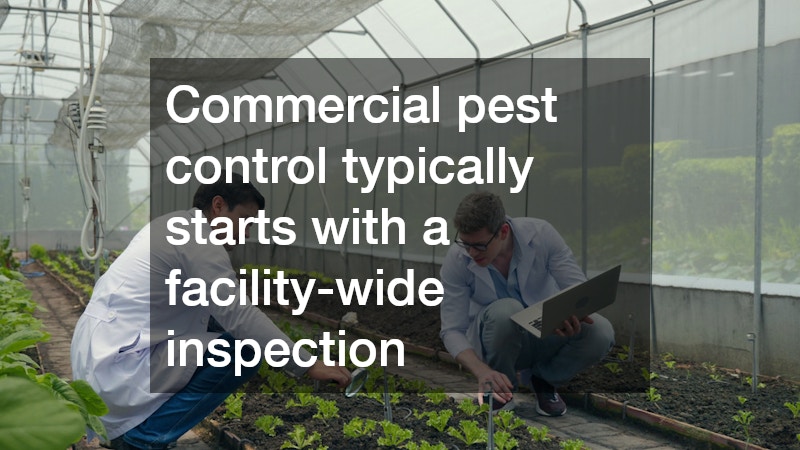
Commercial pest control typically begins with a thorough facility inspection, followed by an ongoing service plan built around prevention, monitoring, and targeted treatment rather than routine chemical spraying alone. A professional technician walks the entire property, identifying current pest activity, likely entry points, and conditions that attract pests, such as moisture sources or gaps in the building envelope.
From there, most reputable providers build a customized plan rather than applying a one-size-fits-all treatment schedule, since a warehouse, a restaurant, and an office building each face different pest pressures and regulatory requirements. Understanding this process upfront helps business owners set realistic expectations and evaluate whether a provider is offering a genuinely thorough service or just a quick spray-and-go visit.
What Happens During the Initial Inspection?
The first visit from a commercial pest control provider is almost always focused on assessment rather than treatment. A thorough inspection typically covers:
- Interior spaces — kitchens, storage areas, mechanical rooms, and other pest-vulnerable zones
- Exterior perimeter — foundation cracks, landscaping, drainage, and potential entry points
- Loading docks and receiving areas — common points of entry for pests arriving with deliveries
- Existing damage or droppings — signs of current or past infestations
- Sanitation and moisture issues — conditions that attract and sustain pest populations
- Structural gaps — utility penetrations, door sweeps, and vents that pests can exploit
This baseline assessment shapes everything that follows, from which treatment methods get used to how often follow-up visits are scheduled.
Why Does Integrated Pest Management Matter for Businesses?
Most reputable commercial pest control providers structure their programs around Integrated Pest Management, commonly called IPM, rather than defaulting to routine chemical treatment. According to the EPA’s principles of Integrated Pest Management, this approach uses a four-tiered process: setting action thresholds, monitoring and identifying pests accurately, prioritizing prevention, and only escalating to targeted control methods when preventive steps aren’t enough. This means a business shouldn’t expect a technician to walk in and spray every surface on every visit; instead, treatment should be based on documented pest activity and calibrated to the specific problem identified. Businesses evaluating providers can ask directly whether their program follows an IPM framework, since this approach tends to reduce unnecessary pesticide use while still delivering effective, lasting results.
What Ongoing Service Should a Business Expect?
After the initial inspection, commercial pest control shifts into a recurring service model built around consistency rather than one-time fixes. Regular visits typically include:
- Scheduled inspections — often monthly or quarterly, depending on the facility type and pest risk
- Monitoring devices — traps and stations placed in key areas to track activity between visits
- Documented service reports — a written record of findings, treatments applied, and recommendations
- Exclusion recommendations — advice on sealing entry points or addressing sanitation issues
- Emergency response availability — a plan for addressing sudden infestations between scheduled visits
- Technician consistency — many businesses prefer a dedicated technician familiar with their specific facility
This structure gives businesses a running record of pest activity over time, which becomes especially valuable during health inspections or third-party audits.
What Additional Requirements Apply to Food Service Businesses?
Restaurants, grocery stores, and other food establishments face pest control requirements beyond what a typical office or retail space needs to meet. According to the FDA Food Code, this model serves as the technical and legal basis that state, local, and territorial agencies use to regulate food safety in restaurants and retail food stores, and pest control is one of the specific areas it addresses. Because most states adopt some version of the Food Code, food service operators should expect their pest control provider to document treatments in a way that satisfies health inspector requirements, not just general pest management best practices. Asking a provider directly about their experience with food service compliance, and requesting sample documentation, helps confirm they understand these heightened requirements before signing a contract.
Why Does Consistent Pest Control Actually Matter for Health and Safety?
Pest control isn’t just about protecting a building’s appearance or inventory; it’s a genuine public health issue with documented risks. According to the EPA’s overview of public health issues caused by pests, pests can spread or trigger serious health problems, including vector-borne diseases like Lyme disease carried by ticks, as well as asthma and allergy symptoms triggered by indoor pests such as cockroaches. For businesses serving the public or employing staff in enclosed spaces, unmanaged pest activity carries liability beyond a failed inspection, since it can genuinely affect the health of employees and customers. This is part of why commercial pest control providers emphasize consistent, documented service rather than reactive treatment only when a problem becomes visible.
What Questions Should You Ask Before Hiring a Provider?
Before signing a service agreement, a few direct questions help clarify what a business is actually getting. Ask whether the provider follows an IPM approach and how they document action thresholds before treating. Ask what’s included in the base service versus what triggers additional charges, since emergency visits or specific pest types sometimes fall outside standard contracts. For food service businesses, confirm the provider’s familiarity with local health code requirements and request a sample of their documentation format. Finally, ask about technician consistency and communication, since a provider who explains findings clearly after each visit tends to catch developing problems earlier than one who simply completes a checklist and leaves.
What’s the Bottom Line on Commercial Pest Control?
A well-run commercial pest control program combines a thorough initial inspection, an IPM-based treatment approach, and consistent documented service visits that build a clear record over time. Food service businesses face additional layers tied to health code compliance, while every business benefits from understanding that pest control is fundamentally a health and safety measure, not just a maintenance task. Choosing a provider who explains their process clearly, documents findings consistently, and prioritizes prevention over reactive spraying sets a business up for fewer surprises during health inspections and a genuinely lower risk of infestation over time. Taking the time to ask the right questions upfront pays off in a service relationship that actually protects the business rather than just checking a box.