The exterior of a commercial property represents far more than a simple structural shell designed to keep the elements out. In the modern real estate landscape, the exterior envelope and the surrounding grounds play a vital, active role in the overall financial performance of the asset. The way a building is maintained on the outside directly influences its internal energy efficiency, the satisfaction and retention rates of its tenants, and its overarching market value in a highly competitive leasing environment. For decades, commercial property maintenance was viewed through a purely reactive lens: patch the leaks when they happen, pave the parking lot when the potholes become unmanageable, and mow the grass to appease the local municipality.
Today, that paradigm has completely shifted. Forward-thinking property owners and facility managers understand that modern commercial upgrades require a holistic, strategic approach. The top of the building must be impenetrable, utilizing advanced materials to reflect solar heat and drastically reduce HVAC loads. Simultaneously, the ground-level exterior must transcend basic landscaping to offer high-quality, functional amenities that attract premium corporate tenants and retail clients. The physical footprint of your property is a massive investment; leaving large portions of it underutilized or vulnerable to the elements is a missed financial opportunity.
By executing well-planned capital improvements, you transform sunk maintenance costs into powerful revenue-generating features. Upgrading the facility from the top down requires specialized knowledge, rigorous planning, and an understanding of how structural systems interact. This comprehensive guide will walk you through the strategic steps necessary to diagnose hidden overhead vulnerabilities, implement high-capacity water management systems, and seamlessly transform underutilized exterior footprints into premium, durable outdoor spaces.
Evaluate Current Structural Integrity and Material Lifespan
Before committing capital to an extensive exterior renovation or an interior build-out, you must ensure that the very top of your building is fundamentally sound. The roof is the most critical defensive system your property possesses. A failure here does not just result in a localized puddle; it can destroy expensive interior equipment, cause widespread mold remediation issues, and force tenants to halt their business operations. Diagnosing the true health of a commercial flat roof requires moving beyond simple visual inspections and utilizing scientific analysis to guide your financial decisions.
Schedule a Comprehensive Infrared Moisture Survey
The most dangerous threats to a commercial flat roof are often entirely invisible to the naked eye. When a membrane is punctured or a seam begins to fail, water infiltrates the system and becomes trapped within the sub-layers of insulation. Over time, this trapped moisture rots the decking, corrodes steel fasteners, and completely degrades the thermal resistance of the building.
-
Understand the science of thermography: During the day, the sun heats the entire roof assembly. After dusk, dry insulation cools down rapidly, while wet insulation retains solar heat for several hours. An infrared thermography scan captures this temperature differential, providing a precise thermal map of where moisture is hiding beneath the surface.
-
Avoid catastrophic overlays: If you simply lay a new membrane over saturated insulation, the trapped moisture will heat up, turn into vapor, and cause the new roof to blister and fail prematurely. Partnering with a reputable commercial roofing company to conduct this diagnostic survey ensures you are making decisions based on empirical data, preventing you from throwing money away on a doomed installation.
-
Pinpoint localized repairs: If the infrared scan reveals that only five percent of the insulation is saturated, you can surgically remove and replace those specific wet sections rather than tearing off the entire roof, saving tens of thousands of dollars in labor and materials.
Analyze the Cost-Benefit of Retrofitting Versus Replacement
A full roof tear-off is one of the most expensive and disruptive capital expenditures a property owner can face. It involves heavy machinery, massive disposal fees, and significant noise pollution for your tenants. Fortunately, if your diagnostic surveys prove that the underlying deck and insulation are still dry and structurally sound, you have highly effective alternative options.
-
Explore elastomeric fluid-applied systems: Rather than tearing off an aging but dry membrane, you can apply a seamless, liquid-applied silicone or acrylic coating. These coatings essentially create a new, custom-fit membrane directly over the existing substrate.
-
Calculate the financial and environmental ROI: Liquid restorations cost a fraction of a full replacement and divert tons of construction waste from local landfills. They also go down quietly and quickly, minimizing disruption to the businesses operating below.
-
Compare long-term projections: When evaluating bids, request a tiered proposal of different roofing services to carefully compare the long-term return on investment. Weigh the ten-to-fifteen-year warranty of a restoration coating against the twenty-to-thirty-year warranty of a completely new single-ply membrane system like TPO or EPDM.
Upgrade Insulation to Meet Modern Energy Codes
If a full tear-off is absolutely necessary, you must view the project not just as a repair, but as a prime opportunity to drastically improve the energy efficiency of the entire building. Building codes continuously evolve, and a facility built twenty years ago likely falls severely short of modern thermal resistance (R-value) standards.
-
Specify high-performance materials: Mandate the installation of polyisocyanurate (polyiso) rigid foam boards. Polyiso offers the highest R-value per inch of any commercial insulation material on the market, creating a formidable barrier against thermal transfer.
-
Stagger the joints to prevent thermal bridging: Ensure the architectural specifications require the insulation boards to be installed in multiple layers with staggered joints. If joints line up, air can escape through the gaps, creating thermal bridges that force your HVAC system to work overtime.
-
Leverage tax incentives and rebates: Significantly increasing the R-value of your building often qualifies the property for local utility rebates and federal energy efficiency tax deductions, helping to offset the upfront capital costs of the heavier insulation.
Upgrade Drainage Systems to Prevent Foundation Damage
Protecting the overhead envelope is only half of the water management equation. Once a commercial roof successfully deflects rain, that massive volume of water must be safely and rapidly transported away from the building’s facade, pedestrian walkways, and structural foundation. A flat commercial roof acts as a massive catchment area; during a severe storm, thousands of gallons of water are displaced in a matter of minutes. Failing to manage this runoff leads to flooded basements, eroded landscaping, and dangerous liability issues on the ground.
Calculate Proper Capacity for Heavy Rainfall Events
The standard aluminum gutters you see on residential homes are entirely inadequate for commercial applications. Commercial drainage requires precision engineering based on the specific square footage of the roof and the historical rainfall intensity data of your geographic region.
-
Upgrade to box-style commercial downspouts: Standard corrugated downspouts easily clog with debris and cannot handle the velocity of water shedding from a large commercial facility. Box-style downspouts offer a significantly larger, smooth-walled channel that allows water to evacuate rapidly without backing up.
-
Ensure structural durability: Commercial gutters must be fabricated from heavy-gauge aluminum or galvanized steel. Precision gutter installation is absolutely vital because these channels must withstand not just the heavy weight of torrential water, but also the extreme weight of ice dams and heavy snow loads during the winter months.
-
Incorporate secondary overflow systems: Never rely on a single method of drainage. If the primary internal drains or scuppers become blocked by a plastic bag or a bird’s nest, the water will pool on the roof, adding massive structural weight. Secondary overflow scuppers must be installed slightly higher than the primary drains to provide an emergency evacuation route for pooling water.
Install Industrial-Grade Debris Guards
If your commercial property is situated near mature trees, pine needles, leaves, and broken branches will inevitably find their way onto the roof. When this organic debris washes into the drainage system, it creates severe blockages that force water to overflow the parapet walls and run down the masonry, eventually causing mortar decay and interior leaks.
-
Avoid cheap plastic inserts: Flimsy residential leaf guards will warp under the intense UV radiation found on a commercial roof and ultimately collapse into the gutter.
-
Specify heavy-duty aluminum guards: Install perforated, heavy-gauge aluminum screens that physically lock into the gutter assembly. These allow high volumes of water to pass through while forcing leaves and debris to blow harmlessly over the edge.
-
Reduce high-altitude maintenance costs: By keeping the channels clear of debris, you drastically reduce the frequency with which maintenance personnel need to ascend ladders or operate boom lifts to manually clean the drains, inherently reducing your operational risk and liability.
Direct Runoff Safely Away from Pedestrian Zones
Transporting the water from the roof to the ground is only the beginning. If the downspouts simply dump thousands of gallons of water directly onto the sidewalks or the base of the foundation, you are actively creating new hazards.
-
Utilize subterranean water routing: The most effective way to manage commercial runoff is to tie the downspouts directly into subterranean French drains or underground piping that leads to the municipal storm sewer or a designated on-site retention pond.
-
Prevent slip-and-fall liabilities: Water must never be allowed to pool on pedestrian walkways, loading docks, or handicap-accessible ramps. In colder climates, pooling water will freeze overnight, creating invisible black ice that leads to devastating liability claims.
-
Coordinate the edge metal pitch: Achieving optimal drainage requires seamless coordination between the ground-level piping and the roofline. It is highly recommended to consult a seasoned local roofing contractor to ensure the pitch of the edge metal and the sloping of the tapered insulation perfectly align with the exterior water diversion plan.
Construct Durable and Inviting Ground-Level Gathering Spaces
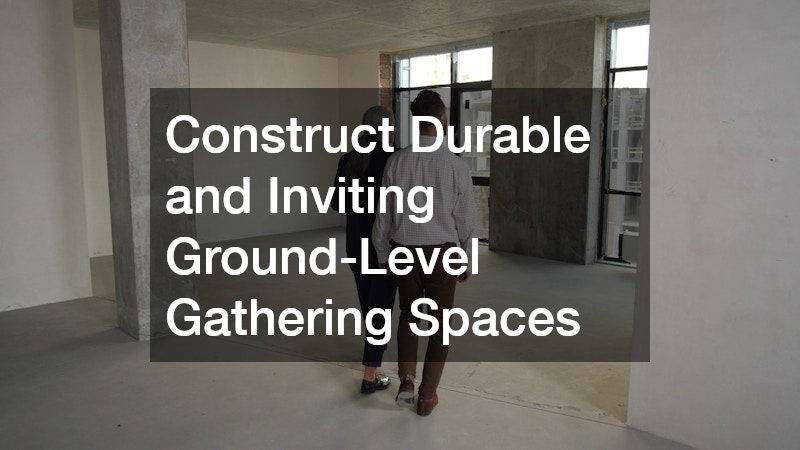
As the remote work culture continues to influence the corporate world, commercial properties must offer more than just a desk and a high-speed internet connection to attract and retain tenants. Employees and clients alike now demand engaging, wellness-focused environments. Transforming underutilized lawns, empty courtyards, or barren concrete pads into highly functional, inviting outdoor gathering spaces is a proven strategy for increasing the perceived value and leasability of the property.
Pour Heavy-Duty, Slip-Resistant Foundations
The foundation of any outdoor commercial space must be engineered for extreme durability. These areas will be subjected to high volumes of foot traffic, the scraping of heavy cast-iron patio furniture, and the relentless wear and tear of the elements.
-
Prioritize solid concrete over loose pavers: While loose stone pavers might look charming, they are prone to shifting, settling, and allowing aggressive weed growth. This creates uneven surfaces and inevitable trip hazards. Stamped concrete or a deeply broom-finished cement slab provides a seamless, incredibly strong foundation.
-
Engineer the sub-base properly: A concrete slab is only as strong as the earth beneath it. The area must be deeply excavated, filled with crushed aggregate, and heavily compacted before a single drop of concrete is poured to prevent winter heaving and cracking.
-
Manage surface water correctly: Engaging a specialized concrete patio contractor is crucial. They possess the necessary expertise to properly grade the slab, ensuring that rain and melted snow naturally slope away from the building’s foundation and into designated landscape drains.
Incorporate Biophilic Design Elements
Commercial spaces often suffer from an excess of brutalist architecture—too much glass, steel, and gray concrete. Biophilic design is an architectural framework that seeks to connect building occupants more closely to nature, which has been scientifically proven to reduce stress, lower blood pressure, and increase cognitive function and productivity among employees.
-
Soften the hardscapes: Break up large expanses of concrete by integrating built-in masonry planter boxes filled with native, drought-resistant vegetation. Native plants require significantly less irrigation and maintenance while providing vibrant, seasonal color.
-
Utilize vertical greenery: If ground space is limited, install living walls or heavy-duty architectural trellises designed to support climbing vines. This creates a lush, immersive environment even in a tight urban courtyard.
-
Blend the indoor-outdoor boundary: A visionary remodeling contractor can help you remove restrictive exterior walls and install massive glass folding or sliding partitions, allowing the indoor breakroom or lobby to flow seamlessly into the new exterior oasis.
Ensure Complete ADA Accessibility
Every capital improvement made to a commercial property must adhere strictly to the guidelines set forth by the Americans with Disabilities Act (ADA). Failing to make your new outdoor amenities fully accessible is illegal, discriminatory, and opens the property ownership up to severe legal penalties.
-
Eliminate sudden drop-offs: Transition zones between the indoor flooring and the outdoor concrete slab must be completely flush. If elevation changes are unavoidable, you must install properly graded ramps with compliant handrails.
-
Design for maneuverability: Ensure that the pathways leading to the gathering space, as well as the space itself, are wide enough to accommodate the turning radius of a motorized wheelchair.
-
Select accessible furnishings: When outfitting the space, provide tables with appropriate clearance heights for wheelchair access, and ensure that the surfacing material is firm, stable, and slip-resistant under all weather conditions.
Implement All-Weather Shade Solutions for Year-Round Use
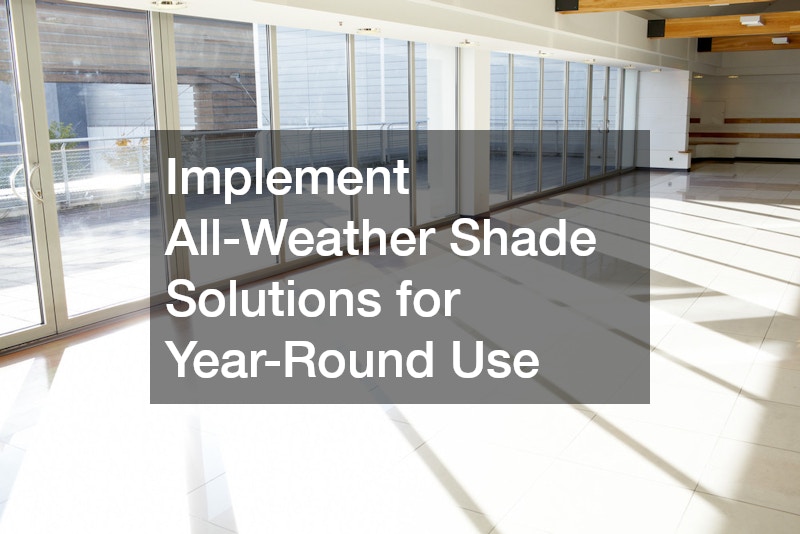
An expansive, beautifully landscaped concrete patio is practically useless if the occupants are forced to endure the blinding glare of the midday sun or flee inside at the first sign of a light drizzle. To maximize the return on your investment, outdoor commercial spaces must be engineered for year-round usability. Providing robust, architecturally appropriate shade and shelter transforms a seasonal amenity into a permanent, highly utilized extension of the building’s leasable square footage.
Evaluate Permanent Versus Retractable Overhead Structures
The type of shelter you choose dictates how and when the space can be utilized. This decision should be based on the local climate, the primary function of the space (e.g., an employee dining area versus a flexible event courtyard), and the architectural aesthetic of the main building.
-
Construct permanent pavilions for maximum durability: If the goal is to create a space that can be used consistently through rain and harsh conditions, invest in a permanent pavilion constructed from structural steel or heavy timber. These structures offer maximum protection and can be engineered to match the facade of the primary building seamlessly.
-
Deploy smart retractable awnings for flexibility: If the space benefits from passive solar heating in the winter but requires intense shading in the summer, motorized, commercial-grade retractable awnings are ideal. Modern systems can be equipped with integrated anemometers (wind sensors) that automatically retract the canvas if wind speeds reach dangerous levels, preventing structural damage.
-
Source from commercial specialists: Property managers must avoid the temptation to purchase off-the-shelf residential kits. It is imperative to source highly durable, custom-fabricated shelters directly from dedicated patio cover companies that understand commercial wind loads and fire-retardant fabric regulations.
Integrate Built-In Lighting and Climate Control
To truly maximize the functionality of an outdoor space, it must be comfortable and safe to use after the sun goes down and when the temperatures drop in the autumn and winter months. The mechanical and electrical infrastructure must be planned and installed during the construction of the overhead shelter.
-
Layer the illumination: Relying on harsh exterior floodlights creates an uninviting, sterile atmosphere. Instead, hardwire dimmable, energy-efficient LED string lights across the beams for ambient glow, and install recessed downlighting to safely illuminate walkways and dining tables.
-
Install directional infrared heating: Traditional propane patio heaters are incredibly inefficient, as they simply heat the air which immediately blows away. Hardwired short-wave infrared heaters mounted to the ceiling structure warm the actual objects and people directly beneath them, extending the usability of the patio deep into the colder months.
-
Promote airflow during the summer: Incorporate heavy-duty commercial ceiling fans designed specifically for damp outdoor environments to maintain a continuous, cooling breeze during stagnant, humid summer afternoons.
Ensure Structural Tie-Ins Do Not Void Warranties
Adding a massive steel pergola, an expansive fabric awning, or a heavily tensioned shade sail to an existing building requires serious structural engineering. The forces exerted by wind and snow on these exterior structures are frequently transferred directly to the building’s facade or parapet walls.
-
Consult structural engineers early: Before any drilling begins, an engineer must verify that the existing masonry or steel framing of the building can handle the additional live and dead loads created by the new outdoor structure.
-
Seal all architectural penetrations: If the new structure needs to be bolted directly through the exterior walls or anchored securely onto the flat roof deck, those penetrations represent a major vulnerability for water intrusion.
-
Protect your existing assets: Any structural modifications or bolt penetrations located near the roofline must be meticulously cross-checked, sealed, and flashed by specialized roofing companies to guarantee that your existing, highly valuable watertight warranties remain completely intact and legally valid.
Establish Strict Vetting Protocols for Vendor Selection
The execution of complex commercial exterior upgrades requires an entire team of highly skilled, specialized professionals working in tandem. From the engineers diagnosing the structural load capacities to the laborers pouring the heavy concrete footings, every individual on the property impacts the final quality of the project. Hiring the wrong vendor based solely on the lowest initial bid is a catastrophic mistake that leads to massive cost overruns, extended delays, and dangerous, sub-par craftsmanship. You must establish rigorous vetting protocols to protect your investment.
Demand Proof of Commercial-Specific Insurance and Certifications
Commercial construction is a high-liability industry. The sheer height of the buildings, the weight of the materials, and the presence of your tenants during the construction phase create a complex risk profile.
-
Verify commercial workers’ compensation: A standard, bare-minimum general liability policy is not enough. You must demand to see current, active certificates for commercial workers’ compensation. If a laborer falls off your roof and the contractor is uninsured, the liability and medical costs can easily be directed at the property ownership.
-
Require manufacturer certifications: Modern construction materials, particularly single-ply membranes and advanced elastomeric coatings, require highly specific application techniques. If a contractor is not explicitly certified by the manufacturer to install that specific brand of material, the manufacturer will refuse to issue a warranty.
-
Look beyond the marketing: Remember that identifying the best roofer for a multi-million dollar commercial project involves deep scrutiny. The ideal candidate is the one who provides a flawless safety record (EMR rating), documented financial stability, and specialized commercial credentials, not just the one with the slickest sales presentation.
Review Case Studies of Similar Sized Facilities
The skills required to shingle a steep-slope residential home do not translate to the complex geometry, massive HVAC units, and specialized drainage systems found on a 50,000-square-foot commercial flat roof. You must ensure the contractor has a proven track record of scaling their operations.
-
Request local commercial references: Ask prospective vendors for the addresses of local commercial facilities they have successfully completed within the last three to five years.
-
Conduct physical site visits: Drive by these properties to inspect the quality of the edge metal detailing, the cleanliness of the concrete finishes, and the overall aesthetic integration of the upgrades.
-
Interview past clients: Call the facility managers of those referenced properties. Ask them directly how the contractor handled unforeseen challenges, whether they kept the job site clean and safe for daily tenant operations, and if they completed the project on the agreed-upon timeline. Filtering through the vast crowd of local roofers requires verifying their logistical capacity to handle large-scale, multi-stage staging without disrupting your core business operations.
Secure Comprehensive Post-Installation Warranties
A capital improvement project is only truly complete when the final inspection is passed and the long-term warranties are legally executed and in your possession. A warranty is your ultimate financial safety net against material defects and shoddy workmanship.
-
Understand the difference between warranties: A standard contractor’s warranty usually only covers their labor for one to two years, while the manufacturer’s warranty only covers the physical material. If a leak occurs in year three, the manufacturer will blame the installation, and the contractor will blame the material, leaving you to pay the repair bill.
-
Demand a “No Dollar Limit” (NDL) warranty: For critical upgrades, negotiate for an NDL warranty directly from the manufacturer. This elite tier of warranty covers both the materials and the contractor’s workmanship. To issue this, the manufacturer will send their own independent inspector to scrutinize the completed job before signing off, providing you with incredible peace of mind.
-
Define maintenance responsibilities clearly: Ensure the final contract explicitly details who is responsible for post-storm inspections, routine debris clearing, and long-term preventative maintenance to ensure the warranty remains valid for its entire stated duration.
Conclusion
Elevating the exterior of a commercial property requires a delicate balance of protective engineering and visionary design. The days of treating a building’s perimeter as an afterthought are long gone. In a modern, competitive leasing landscape, the physical envelope of your property is a direct reflection of the business operating within it.
By taking a proactive, strategic approach, you secure the top-down integrity of the structure. Upgrading the insulation, modernizing the drainage infrastructure, and utilizing advanced, weather-resistant materials protects your massive capital investment from the relentless assault of the elements. Simultaneously, by looking to the ground level and transforming barren concrete and underutilized lawns into dynamic, accessible, and deeply comfortable outdoor environments, you actively enhance the daily lives of the people who utilize your building.
These comprehensive capital improvements should never be viewed as mere sunk costs or unavoidable maintenance burdens. They are strategic investments that yield highly tangible returns. A well-protected, beautifully appointed building drastically reduces emergency repair expenditures, significantly lowers monthly utility overhead, commands premium lease rates, and fosters incredible loyalty and retention among your tenant base.
Do not wait for a catastrophic leak to force your hand, and do not let your valuable exterior square footage sit idle. Take the definitive first step this week by scheduling a comprehensive, professional diagnostic audit of your facility. Gather the blueprints, begin conceptualizing the potential of your new outdoor amenities, and start building the team of vetted professionals who will help transform your commercial property into a secure, highly profitable, and universally admired asset.